
Nothing will propel an initiative faster from concept to approval than a compelling Return on Investment (ROI). ROI helps prioritize initiatives and supporting resources. It is common for ROI to be the primary measure of success (or failure) for a project.
Leading organizations expect returns from communications solutions to be similar to, or better than, investments into their core business. And rightly so. Voice, data, mobile and cloud services are critical pillars of an organization's infrastructure. Many organizations find that these services account for their largest non-payroll expense. Maximizing ROI for an investment as large as communications is absolutely vital.
How to Maximize ROI
What is the secret? The secret to maximizing ROI is to efficiently maintain an optimized communications environment. It is not enough to get your environment in perfect order with all solutions optimized both functionally and financially. Difficult as this may seem, establishing order is only the beginning.
Waste is created when organizations hastily invest in "clean-up" efforts to right-size their environments but fail to implement proper ongoing control measures. As a result, the situation returns to its pre-project state. Or often worse.
The chart below shows a trend of total spend for 24 months following the start of the initial project across 35 clients representing varying sizes, complexities and industries. For ease of comparison, trends are represented as a percentage of the initial baseline.
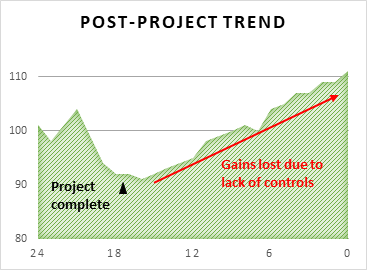
Post-project spend trend, 35 clients, 24 months.
Shortly after project completion, items pop up here and there. Organizations may address the first wave of items assuming their resources have sufficiently recovered from the stress of the initial clean-up project. But quickly we see evidence that competing priorities deplete these resources just as a deluge of new problems emerge.
3 Keys to Maximizing ROI
Maintaining an optimized environment — efficiently — distinguishes successful initiatives from the rest. The chart below shows a trend of 19 organizations' costs over the same 24-month period. However, these organizations implemented automated lifecycle management practices during and after their initial "clean-up" phase.
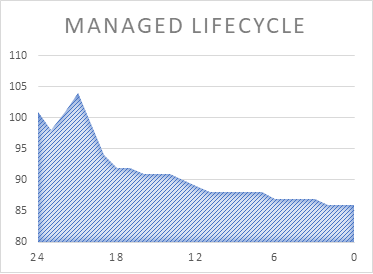
Managed lifecycle spend trend, 19 clients, 24 months.
Three key characteristics of ongoing optimization efforts are Visibility, Control and Automation.
- Visibility is more than tracking spending and budgets. Effective visibility includes service inventory and change management, contract terms and achievement, and trend analysis at the service, location, vendor, and budget-detail levels. Benchmarking key performance indicators with similar organizations can provide illuminating perspective for targeting areas of improvement.
- Control measures allow for continual improvement while protecting progress. Service inventory controls, for example, ensure quality of service and compliance. Change management controls eliminate waste while maintaining centralization of planning, execution and maintenance.
- Automation is a key factor to ensuring adoption of the standards mentioned. Automation ensures resources can remain focused on making well-informed decisions on the most impactful initiatives without being inundated with tedious, repetitive tasks.
With insightful visibility, proper controls, and process automation, return on investment is maximized. Engaging in "clean-up" projects alone can generate some short-term gains, but when carefully evaluated they may not be worth the effort. Make sure clean-up is a one-time project by taking necessary steps early to protect and grow savings achieved. Not only will it yield the best results, but it will ensure the organization is well-positioned for whatever future challenges arise.
Cost Management Group (CMG) is focused on delivering the right solutions to meet the growing demands of its clients.